.png)
ʻO Wai Makou?
“This is the future hub for Native Hawaiian Healing.”
-Kauka Kauahi, 2026
Reader, we welcome you to learn about us knowing that our future will be shaped by YOU.
Our Hoa Hoʻola - or our recipients of care.
Our Hoa Hoʻola - or our recipients of care.
Na Aliʻi o Ka Malu has a big future ahead. And we want you to join it.
Na Aliʻi o Ka Malu will become a center on each island where anyone in Hawaiʻi can come to receive all forms of Traditional Hawaiian Healing,
all under a single roof.
Na Aliʻi o Ka Malu will become a center on each island where anyone in Hawaiʻi can come to receive all forms of Traditional Hawaiian Healing,
all under a single roof.
Kuleana
This is for you.
Our kuleana is to our lahui. To the modern-day Kanaka who doesn’t feel they are enough. To the ʻohana who struggle with generational trauma. To the Kamaʻaina navigating grief. To those who are ready to heal.
We uphold this kuleana by weaving the traditions of our kupuna and today's psychological practices to provide the highest standard of care for our generation. We welcome anyone and everyone who is in Hawaiʻi to connect.
Manaʻolana
We will build what used to be.
Our kupuna understood systems and balances. They knew how to survive together for thousands of years. Our intention is to revive their system of care, while incorporating modern-day practices.
Ka Hale Hoʻola Maoli. The Native Hawaiian Healing Center in which all forms of hana hoʻola maoli (Native Hawaiian Healing), as well as psychological practices, will be provided to the lahui All in one hale (place).
Hana
We are here for you.
If you're facing stress, professional issues, intergenerational trauma, grief, or just struggling to get through the day, we are here to help. Our services are tailored specifically to you and your preferences.
As we grow, we will build pilina within the lahui to provide eventually Group Therapy, Laʻau Lapaʻau, Lomilomi, Hana Lima, and more traditional practices. Services we currently offer are described in depth on the services page. Check um out.
We welcome other practitioners to connect so we may refer our hoa ola (those who entrust us with their care) to you. Please contact us at practitioner@naokm.com
The Founder's Note
“The vision started in 2019. Seeing our Lahui come together to defend our mauna was more than special, it was life changing. Poʻe Hawaiʻi, not just Kanaka Maoli O Hawaiʻi, came together as a lahui to protect ʻaina. We saw our community gather resources of all different forms all in one location. From classes to medics, food to music, from monetary to physical support. Through this all pilina was built, ʻike was shared, and all those who came were welcomed. It was a community in its truest form. That was the first time in my life, I felt that I experienced what a modern Hawaiian society could look like and how it would function. It felt as though I was transported back in time, or more accurately our ancestors were brought there with us all. This caused me to think, what can I do to make this exist permanently for the next generations to come.
The second piece to the vision came in Lahaina. After the wildfires we were given the opportunity to kokua. During that time I saw again how our lahui was able to come together. Multiple hubs with donations of food, clothing, flashlights, pots and pans, and all kinds of necessities that you couldn’t even have thought of but knew were needed when you were without. It was amazing to see and be a part of such a response after a generational tragedy. During that time we worked side by side as Hoʻoponopono Practitioners with Lomilomi Practitioners. It made so much sense to see how the two healing methods could work together so well. I felt again the call to bring to life the vision from my time at Mauna Kea. It was undeniable, and most importantly, it was possible.
I realized I did not have to build that entire community that I witnessed in each place. I did not have to know everyone, everything. I still don't. But what I could do was start with what I can do and where my expertise lies. To fill a void that has existed since the illegal overthrow of our kingdom. Reader, I say this not to boast or brag, or to say that I am the sole perpetuator nor the first to think of this idea. I am one set of hands building toward a better future. I recognize that what we are rebuilding is such. Rebuilding. Not a new innovation or a brand new system. But one that was proven to work. Our people survived amongst one another for thousands of years, on the most isolated place on earth.
How they did this was through malama, through kuleana, through manaʻolana, through hana, and through tradition. A tradition of respect and reciprocation. We learned to trust kupuna, but also to ask questions and learn other ways so we may improve and build upon the foundation our ancestors built. From having electricity before the lighthouse to being the most literate place in the world. We recognized the innovation of other cultures and embraced the good. Our kupuna had great wisdom, and embraced many into our fold regardless of race or religion. We understood that in order to survive sometimes we must fight and others we must heal. In the past, each ahupuaʻa would have their various kahuna, kahu, or haku who could be sought out for healing. These kahu would live solely to heal others, and were greatly taken care of in return. These traditions of healing exist today still. A majority of which are familial, or central only to a certain place. However, seldom places offer these forms of healing, let alone more than one type of healing, all in one place. That is where we come in.
After my time as a humble guest and servant at Puʻuhuluhulu and Lahaina, I knew what I was supposed to do. Bridge the gap between our ancestors’ systems, our modern-day examples, and the little that I could do as an individual. To bring healers together. That is who we are. That is who I am.
Aloha, it's nice to meet you. If you don't know yet, I am Kauka (Dr.) Isaiah Kealiʻiokamalu Kauahi. I go by Kauka Kauahi and this,
This is Na Aliʻi o Ka Malu - The Chiefs of Peace.
This is the future hub of Native Hawaiian Healing.
Reader, I want you to imagine our future with me. A hale where a Hoa Hoʻola can walk in and consult with multiple Kahu to receive Hoʻoponopono, Laʻau Lapaʻau, Lomilomi, Ola Kino, Hana Lima, Hana Noʻeau, and Pilina...All under one roof.
Ka Hale Hoʻola Maoli - The Native Hawaiian Healing Center
That is who we are, where we are going, and we hope that you will support us in doing so, as you will shape our future. Most importantly, we hope you feel welcome here. No matter your race, birthplace, sexuality, religion, or identity. All are welcome. As we continue to kukulu, we will add more services and eventually make our way to having a physical location, and eventually, one per island. Maybe even one in Vegas, can’t forget the 9th.
Mahalo for coming to my ted talk, lol. Please explore and learn more about us through the various tabs. We look forward to meeting you.”
-Me ka haʻahaʻa,
Kauka Kauahi
Founder
Haku Hoʻoponopono
Licensed Clinical Psychologist
August 28th, 2026 2:16am
The second piece to the vision came in Lahaina. After the wildfires we were given the opportunity to kokua. During that time I saw again how our lahui was able to come together. Multiple hubs with donations of food, clothing, flashlights, pots and pans, and all kinds of necessities that you couldn’t even have thought of but knew were needed when you were without. It was amazing to see and be a part of such a response after a generational tragedy. During that time we worked side by side as Hoʻoponopono Practitioners with Lomilomi Practitioners. It made so much sense to see how the two healing methods could work together so well. I felt again the call to bring to life the vision from my time at Mauna Kea. It was undeniable, and most importantly, it was possible.
I realized I did not have to build that entire community that I witnessed in each place. I did not have to know everyone, everything. I still don't. But what I could do was start with what I can do and where my expertise lies. To fill a void that has existed since the illegal overthrow of our kingdom. Reader, I say this not to boast or brag, or to say that I am the sole perpetuator nor the first to think of this idea. I am one set of hands building toward a better future. I recognize that what we are rebuilding is such. Rebuilding. Not a new innovation or a brand new system. But one that was proven to work. Our people survived amongst one another for thousands of years, on the most isolated place on earth.
How they did this was through malama, through kuleana, through manaʻolana, through hana, and through tradition. A tradition of respect and reciprocation. We learned to trust kupuna, but also to ask questions and learn other ways so we may improve and build upon the foundation our ancestors built. From having electricity before the lighthouse to being the most literate place in the world. We recognized the innovation of other cultures and embraced the good. Our kupuna had great wisdom, and embraced many into our fold regardless of race or religion. We understood that in order to survive sometimes we must fight and others we must heal. In the past, each ahupuaʻa would have their various kahuna, kahu, or haku who could be sought out for healing. These kahu would live solely to heal others, and were greatly taken care of in return. These traditions of healing exist today still. A majority of which are familial, or central only to a certain place. However, seldom places offer these forms of healing, let alone more than one type of healing, all in one place. That is where we come in.
After my time as a humble guest and servant at Puʻuhuluhulu and Lahaina, I knew what I was supposed to do. Bridge the gap between our ancestors’ systems, our modern-day examples, and the little that I could do as an individual. To bring healers together. That is who we are. That is who I am.
Aloha, it's nice to meet you. If you don't know yet, I am Kauka (Dr.) Isaiah Kealiʻiokamalu Kauahi. I go by Kauka Kauahi and this,
This is Na Aliʻi o Ka Malu - The Chiefs of Peace.
This is the future hub of Native Hawaiian Healing.
Reader, I want you to imagine our future with me. A hale where a Hoa Hoʻola can walk in and consult with multiple Kahu to receive Hoʻoponopono, Laʻau Lapaʻau, Lomilomi, Ola Kino, Hana Lima, Hana Noʻeau, and Pilina...All under one roof.
Ka Hale Hoʻola Maoli - The Native Hawaiian Healing Center
That is who we are, where we are going, and we hope that you will support us in doing so, as you will shape our future. Most importantly, we hope you feel welcome here. No matter your race, birthplace, sexuality, religion, or identity. All are welcome. As we continue to kukulu, we will add more services and eventually make our way to having a physical location, and eventually, one per island. Maybe even one in Vegas, can’t forget the 9th.
Mahalo for coming to my ted talk, lol. Please explore and learn more about us through the various tabs. We look forward to meeting you.”
-Me ka haʻahaʻa,
Kauka Kauahi
Founder
Haku Hoʻoponopono
Licensed Clinical Psychologist
August 28th, 2026 2:16am
Why NAOKM?
We are different.
The way in which we approach therapy, consultation, GOLD, and Hoʻoponopono is rooted in cultural tradition, clinical perspective, and authenticity. Western psychology has centered approaches such as the “blank slate” therapist, manualized treatments, and has a documented history of using psychological science to justify eugenics, racial hierarchy, discriminatory testing, and the colonial assimilation of Indigenous peoples. Western psychology has a documented history of positioning its own theories and treatments as the standard while dismissing, devaluing, and even pathologizing Indigenous ways of knowing, cultural healing practices, Native values, and spiritual experiences. What that means is: Western psychology has often treated its own way as the right way, while treating Indigenous people, knowledge, beliefs, and healing practices as wrong, lesser, or inherently false. Don't believe us: Here is the formal apology from the American Psychological Association for doing just that, click this to check it out.
They not like us.
We recognize that indigenous traditions of healing predate western psychology by a few thousand years. We treat that ʻike as such. A historically tried method that has existed 14 times longer than western therapy has. This means that we acknowledge the value of traditional healing from all cultures, not just Hawaiian. Over here, we connect with our Hoa Hoʻola by being real. We bring our authentic selves into the therapeutic setting. We aren't robots, and if you wanted to talk to one you would use AI. We structure our healing around your personal preferences and cultural identity. For example if prayer is needed to start or end a session, cultural protocol, services in ʻOlelo Hawaiʻi or Pidgin, etc. All of these are considered and incorporated into the session.
We incorporate the best of both, when appropriate.
We utilize the best of both worlds in our Integrative Therapy model. There are many empirically supported therapeutic modalities which have proven themselves as effective treatment. Some of the key strengths of western therapy is its systems, protocol, and research that has informed clinicians on effective care and the needs of this generation. We do our best to integrate the two, traditional and western, so that our Hoa Hoʻola receive the best possible care. We also hold space for both to run independently from one another. If a Hoa Hoʻola prefers western style care, we are capable of providing such, just the same with Hoʻoponopono. We tailor it to your preferences, while ensuring the therapeutic relationship and treatment honors your healing.
You would choose us if you wanted high level expert care, that feels like you're talking story with ʻohana.
Our goal is not to return you to who you were before things became difficult. Our goal is to take you further, to help you thrive, not just survive. We will work with you to understand the challenges you are facing, learn to navigate and make peace with them, and then support you in becoming the best version of yourself. We do our absolute best to make the healing environment feel safe and normal. We are also committed to providing a challenge when needed for growth. If you are looking for a healing setting where you can laugh, cry, say things how you want, and still receive expert care, this is the place for you. If Na Aliʻi o Ka Malu is not the right fit, we can explore referral options when appropriate and available.
TL;DR
Western psychology has done real harm. The founder is a Native Hawaiian psychologist. We value psychological expertise on EQUAL footing to indigenous expertise. We do our best to integrate the best of both worlds (western and traditional) while holding space for each independently if needed. We refuse to accept that psychology gets exclusive authority over what counts as legitimate healing.
The way in which we approach therapy, consultation, GOLD, and Hoʻoponopono is rooted in cultural tradition, clinical perspective, and authenticity. Western psychology has centered approaches such as the “blank slate” therapist, manualized treatments, and has a documented history of using psychological science to justify eugenics, racial hierarchy, discriminatory testing, and the colonial assimilation of Indigenous peoples. Western psychology has a documented history of positioning its own theories and treatments as the standard while dismissing, devaluing, and even pathologizing Indigenous ways of knowing, cultural healing practices, Native values, and spiritual experiences. What that means is: Western psychology has often treated its own way as the right way, while treating Indigenous people, knowledge, beliefs, and healing practices as wrong, lesser, or inherently false. Don't believe us: Here is the formal apology from the American Psychological Association for doing just that, click this to check it out.
They not like us.
We recognize that indigenous traditions of healing predate western psychology by a few thousand years. We treat that ʻike as such. A historically tried method that has existed 14 times longer than western therapy has. This means that we acknowledge the value of traditional healing from all cultures, not just Hawaiian. Over here, we connect with our Hoa Hoʻola by being real. We bring our authentic selves into the therapeutic setting. We aren't robots, and if you wanted to talk to one you would use AI. We structure our healing around your personal preferences and cultural identity. For example if prayer is needed to start or end a session, cultural protocol, services in ʻOlelo Hawaiʻi or Pidgin, etc. All of these are considered and incorporated into the session.
We incorporate the best of both, when appropriate.
We utilize the best of both worlds in our Integrative Therapy model. There are many empirically supported therapeutic modalities which have proven themselves as effective treatment. Some of the key strengths of western therapy is its systems, protocol, and research that has informed clinicians on effective care and the needs of this generation. We do our best to integrate the two, traditional and western, so that our Hoa Hoʻola receive the best possible care. We also hold space for both to run independently from one another. If a Hoa Hoʻola prefers western style care, we are capable of providing such, just the same with Hoʻoponopono. We tailor it to your preferences, while ensuring the therapeutic relationship and treatment honors your healing.
You would choose us if you wanted high level expert care, that feels like you're talking story with ʻohana.
Our goal is not to return you to who you were before things became difficult. Our goal is to take you further, to help you thrive, not just survive. We will work with you to understand the challenges you are facing, learn to navigate and make peace with them, and then support you in becoming the best version of yourself. We do our absolute best to make the healing environment feel safe and normal. We are also committed to providing a challenge when needed for growth. If you are looking for a healing setting where you can laugh, cry, say things how you want, and still receive expert care, this is the place for you. If Na Aliʻi o Ka Malu is not the right fit, we can explore referral options when appropriate and available.
TL;DR
Western psychology has done real harm. The founder is a Native Hawaiian psychologist. We value psychological expertise on EQUAL footing to indigenous expertise. We do our best to integrate the best of both worlds (western and traditional) while holding space for each independently if needed. We refuse to accept that psychology gets exclusive authority over what counts as legitimate healing.
Our Philosophy
We do not believe that every struggle should automatically be treated as pathology.
Sometimes people are hurting. Sometimes relationships need repair. Sometimes families need restoration. Sometimes someone is grieving, overwhelmed, disconnected, or carrying experiences that require clinical care.
And sometimes a person simply wants to grow.
We believe healing must understand the person within the whole context of their life. Our wellbeing is shaped not only by what happens within us, but by our relationships with ʻohana, community, culture, spirituality, ʻaina/land/ocean, and the experiences that have shaped us. When those connections are strengthened, healing can extend beyond the individual.
We also believe there is no single path to healing. What is meaningful for one person may not be meaningful for another. Culture, identity, beliefs, experiences, and connection to tradition all matter in determining what care should look like.
The ʻike passed down from those before us is not something that belongs only to the past. It can continue to teach us how to live, heal, relate, and move forward. At the same time, new knowledge can give us additional tools. Our responsibility is not to choose one simply because it is older or newer, but to understand what knowledge is appropriate for the person and the work in front of us.
Healing also requires participation and kuleana. Our role is not to become the authority over your life. We bring knowledge, structure, perspective, challenge, and presence to the process while you remain an active participant in determining where that process leads.
Above all, we believe the ʻike of those who came before us can help create better paths for those here today and the generations still to come.
Sometimes people are hurting. Sometimes relationships need repair. Sometimes families need restoration. Sometimes someone is grieving, overwhelmed, disconnected, or carrying experiences that require clinical care.
And sometimes a person simply wants to grow.
We believe healing must understand the person within the whole context of their life. Our wellbeing is shaped not only by what happens within us, but by our relationships with ʻohana, community, culture, spirituality, ʻaina/land/ocean, and the experiences that have shaped us. When those connections are strengthened, healing can extend beyond the individual.
We also believe there is no single path to healing. What is meaningful for one person may not be meaningful for another. Culture, identity, beliefs, experiences, and connection to tradition all matter in determining what care should look like.
The ʻike passed down from those before us is not something that belongs only to the past. It can continue to teach us how to live, heal, relate, and move forward. At the same time, new knowledge can give us additional tools. Our responsibility is not to choose one simply because it is older or newer, but to understand what knowledge is appropriate for the person and the work in front of us.
Healing also requires participation and kuleana. Our role is not to become the authority over your life. We bring knowledge, structure, perspective, challenge, and presence to the process while you remain an active participant in determining where that process leads.
Above all, we believe the ʻike of those who came before us can help create better paths for those here today and the generations still to come.
Our Founder
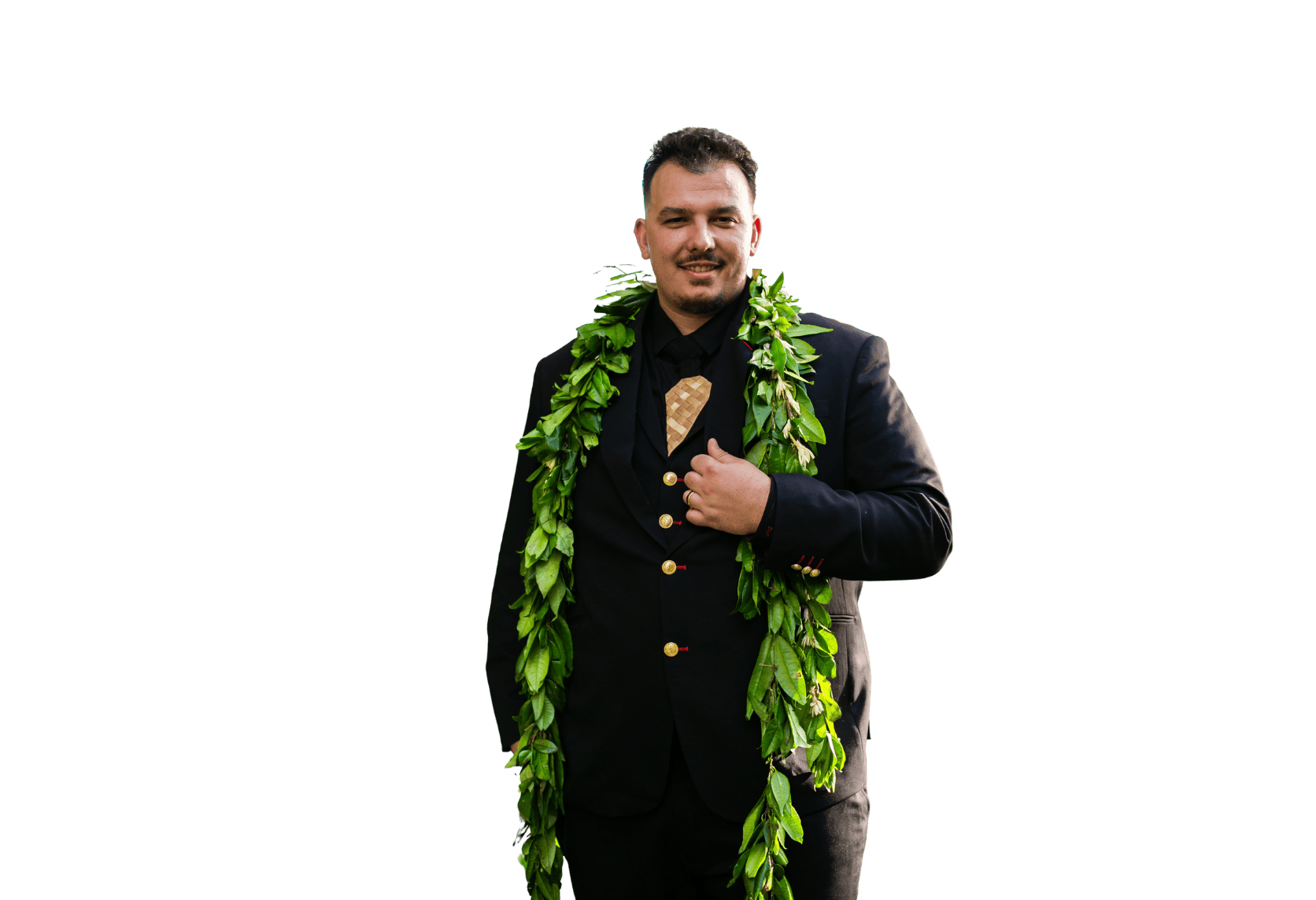
Dr. Kealiʻiokamalu Kauahi
PsyD
Clinical Psychologist
Haku Hoʻoponopono
Kauka Kauahi (Dr. Kauahi) is a Kanaka Maoli Haku Hoʻoponopono and Licensed Clinical Psychologist (PSY-2314). He was born in Hawaiʻi, and raised in California and Hawaiʻi. He is a previous Division 1 athlete who played as a left guard for the University of Hawaiʻi Rainbow Warriors. Kauka Kauahi graduated from the University of Hawaiʻi at Manoa with a Bachelor of Arts in Sociology. He then went on to graduate cum laude from the California School of Professional Psychology at Alliant International University, where he earned a Doctor of Psychology in Clinical Psychology (PsyD) with an emphasis in Multicultural Psychology. He is a dedicated Kanaka Maoli who is striving to perpetuate his culture.
He published the first known psychological dissertation written in ʻOlelo Hawaiʻi and made it freely available to the public.
Click here to read it: No Na Hanauna Hou: Ke Ala O Ke Ola Mai Na Kupuna
Most of all, he is a resource available to the lahui.
In regard to western training, Kauka Kauahi specializes in Multicultural Integrative Therapy. Meaning his expertise lies in utilizing cultural frameworks to serve as the foundation of treatment, while taking the best interventions from multiple forms of therapy to create an individually tailored treatment program.
Some of his core therapeutic modalities are Cognitive Behavioral Therapy, Psychodynamic Therapy, Emotion-Focused Therapy, Narrative Therapy, and Client-Centered Therapy...maybe even a little sprinkle of Gestalt.
Kauka Kauahi provides Hoʻoponopono, Individual Therapy, Couples Therapy, Clinical and Cultural Consultation, and GOLD. Kauka Kauahi's specialties lie with Native Hawaiian issues, Anger, Depression, Anxiety, Intergenerational Trauma, Historical Trauma, Men's Issues, Relationships, life transitions, High performing professionals, and Athletes.
Kauka Kauahi specializes in Multicultural Integrative Therapy. At the center of this approach is the belief that no person exists by themselves. We are shaped by our families, cultures, relationships, communities, histories, spirituality, identities, environments, and the systems surrounding us. To understand the person, we have to understand the world that person lives within.
Because of this, Kauka Kauahi does not believe there is one form of therapy that holds every answer for every person. His approach uses the cultural framework of the person as a foundation and then draws from different therapeutic modalities according to what is actually needed. Cognitive Behavioral Therapy, Psychodynamic Therapy, Acceptance and Commitment Therapy, Emotion-Focused Therapy, Narrative Therapy, Client-Centered Therapy, Interpersonal Therapy, Family Systems, Positive Psychology, Solution-Focused Therapy, and Motivational Interviewing are tools. They are not the person.
The purpose is not to make someone fit a theory. The theory should be useful to the person.
For Kanaka Maoli in particular, Kauka Kauahi's research found that culturally congruent care cannot simply be Western therapy decorated with Hawaiian language or practices. The foundation matters. Culture, spirituality, ʻohana, relationship, historical experiences, and ʻike kupuna may fundamentally change how distress is understood, how healing is approached, and what a pono pathway forward may look like.
This does not mean rejecting Western psychology. Kauka Kauahi's own research concluded that Western and Kanaka Maoli approaches can both hold value. They may work together, they may remain separate, and they may learn from one another. The important question is not which school of thought gets to win.
The important question is what helps the person heal.
Kauka Kauahi's cultural approach begins with something simple:
Our ʻike does not become valuable because Western psychology discovers it.
Kanaka Maoli cared for one another, resolved conflict, restored relationships, understood the connection between kanaka, ʻaina, ʻohana, Ke Akua, and spirit, and practiced ways of healing long before the development of modern psychology. Those practices carry their own histories, meanings, responsibilities, and foundations.
For this reason, Kauka Kauahi does not approach culture as an intervention that gets added onto an already Western framework. Particularly when serving Kanaka Maoli, the goal is to allow our own cultural understandings to remain at the root while also being willing to learn from knowledge that comes from elsewhere.
That distinction is especially important with Hoʻoponopono. Hoʻoponopono is not simply psychotherapy translated into Hawaiian ideas. It is not a technique Kauka Kauahi learned in graduate school and then culturally adapted. His understanding comes through the practitioners, Haku, kumu, ʻohana, and ʻike from whom he has been taught. That relationship carries kuleana. Some knowledge can be shared openly. Some is learned through doing. Some belongs in relationship rather than on a website.
His dissertation ultimately arrived at a position very similar to the one that guides his work today: there does not need to be only one source of knowledge. Psychology can teach us something. Our kupuna can teach us something. Other peoples and cultures can teach us something.
But openness to other knowledge should never require us to uproot our own.
This philosophy also guides Kauka Kauahi's work with people who are not Kanaka Maoli. Cultural care does not mean imposing Hawaiian beliefs onto another person. It means having enough humility to recognize that their culture, family, spirituality, history, identity, and worldview deserve to be understood as well.
Know the person. Know where they come from. Listen deeply enough to understand the world through which they learned to live.
Then begin the work.
Kauka Kauahi's relationship with culture might not have started how you think.
He was born in Hawaiʻi and raised between Hawaiʻi and California, spending much of his childhood within the Kanaka Maoli diaspora. Growing up away from Hawaiʻi meant growing up with connection to his culture, but also distance from parts of it. He did not grow up fluent in ʻOlelo Hawaiʻi. He knows what it is to reconnect, to question where you belong, to learn what was not passed down completely, and to find your own pathway back.
Athletics became another major part of that journey. Kauka Kauahi returned home to play Division I football as an offensive lineman for the University of Hawaiʻi Rainbow Warriors. Returning to Hawaiʻi eventually became about much more than football. It became an opportunity to reconnect with language, culture, education, ʻohana, and ultimately with himself.
His dissertation describes this period of his life as learning to find lokahi within himself: learning that his Kanaka Maoli identity and his experiences within Western environments did not require one side of him to erase the other. Instead, his pathway forward required learning how to hold both while knowing where his foundation came from.
That experience would eventually shape nearly everything that followed.
His path from football, to Sociology, to Clinical Psychology, to Multicultural Psychology, to ʻOlelo Hawaiʻi, to Hoʻoponopono was not the story of someone who always knew exactly where he was going. It was a process of finding his kuleana.
That is part of why No Na Hanauna Hou: Ke Ala o Ke Ola Mai Na Kupuna was written not simply as an academic requirement, but as something intended for those coming after him.
For the Kanaka who feels disconnected.
For the athlete trying to figure out what comes next.
For the person who feels like they are not enough.
For those who know their culture deeply, and those who are still finding their way back to it.
He is here for you.
Kauka Kauahi's professional path has crossed many different areas of psychology because he believes there is value in learning from more than one place.
His clinical experience has included community mental health, residential treatment, juvenile forensic settings, university counseling, school-based mental health, crisis response, disaster relief, and culturally grounded healing. Across these settings he has provided individual, couples, family, and group therapy; trauma-informed care; crisis intervention; psychological assessment; career assessment; consultation; outreach; and culturally responsive services to children, adolescents, adults, college students, athletes, professionals, couples, families, and communities.
His training has also intentionally crossed cultural and Western systems of knowledge. During his APA-accredited doctoral internship at the University of Hawaiʻi at Manoa, he provided psychotherapy to a widely multicultural population, worked with student-athletes, conducted career assessment and relationship-focused services, and provided psychological services in ʻOlelo Hawaiʻi.
Following the Lahaina wildfires, Kauka Kauahi served as both a postdoctoral fellow and cultural practitioner supporting survivors of the disaster. His work included psychotherapy and Hoʻoponopono, community outreach, program and treatment planning, and collaboration with community leaders and organizations responding to the needs of Lahaina.
His work has also extended beyond direct clinical practice. Kauka Kauahi has presented on Kanaka Maoli mental health, diaspora, identity, oppression, internalized oppression, historical and intergenerational trauma, men's emotional health, decolonization, Indigenous healing, and Hoʻoponopono. He has also contributed published work with Cognella addressing culturally congruent clinical interventions and treatment planning for internalized oppression.
You can read some of his published work here:
Clinical Interventions for Internalized Oppression
His most significant academic work remains his doctoral dissertation, No Na Hanauna Hou: Ke Ala o Ke Ola Mai Na Kupuna. The dissertation examined the experiences of Kanaka Maoli who had participated in Hoʻoponopono and Eurocentric psychotherapy and explored questions of treatment satisfaction, quality of life, acculturation, socioeconomic status, cultural identity, historical trauma, spirituality, ʻohana, and culturally congruent healing.
Kauka Kauahi wrote his dissertation in ʻOlelo Hawaiʻi, defended the dissertation in ʻOlelo Hawaiʻi, and published the dissertation in ʻOlelo Hawaiʻi. The English translation was included afterward.
Based on the literature available at the time of publication, it is known to be the first ever Doctoral Dissertation in Psychology to be written, defended, and published in ʻOlelo Hawaiʻi.
Click here to read it: No Na Hanauna Hou: Ke Ala o Ke Ola Mai Na Kupuna
That decision reflected something larger than language.
It reflected his belief that Hawaiian knowledge should not always have to enter Western spaces through English first.
Today, the same idea continues to guide his professional work. Kauka Kauahi is a Haku Hoʻoponopono. He is a Licensed Clinical Psychologist. He is Kanaka Maoli. He was raised in the diaspora and he is a previous D1 Athlete. He is all of these and he is each of these. And reader, so are you. You are both all and one, individual and united, you are enough.
There is knowledge in many places.
The work is knowing what belongs where, what should remain distinct, what can strengthen the other, and how everything we have been taught can ultimately be placed in service of the people before us.
If you read this far, good s**t. Plenty words lol.
Na Aliʻi o Ka Malu is a Native Hawaiian Healing Center in its beginning stage: an Oʻahu-based, Kanaka Maoli-owned healing and psychological practice offering secure telehealth across Hawaiʻi.
Dr. Isaiah Kealiʻiokamalu Kauahi, PsyD
• Licensed Clinical Psychologist (Hawaiʻi PSY-2314) • Haku Hoʻoponopono •
+1-808-515-6950 • info@naokm.com
By appointment only, with evening and weekend availability. Online setup through the secure client portal is the fastest way to begin.
• Licensed Clinical Psychologist (Hawaiʻi PSY-2314) • Haku Hoʻoponopono •
+1-808-515-6950 • info@naokm.com
By appointment only, with evening and weekend availability. Online setup through the secure client portal is the fastest way to begin.
This website, email, client portal, and social media are not monitored continuously and are not crisis services.
THIS WEBSITE IS NOT TO BE USED FOR EMERGENCY SITUATIONS. IF YOU OR OTHERS ARE IN IMMEDIATE DANGER OR EXPERIENCING A MEDICAL EMERGENCY, CALL 911 IMMEDIATELY OR GO TO THE NEAREST EMERGENCY DEPARTMENT.
FOR MENTAL HEALTH CRISIS
CALL OR TEXT 988.
IN HAWAIʻI, YOU MAY ALSO CALL HAWAIʻI CARES AT
+1-808-832-3100 OR +1-800-753-6879.
CALL OR TEXT 988.
IN HAWAIʻI, YOU MAY ALSO CALL HAWAIʻI CARES AT
+1-808-832-3100 OR +1-800-753-6879.
Relationship disclaimer: Website information is educational and does not create a psychologist-client, therapy, consultation, or other professional relationship. A relationship begins only after fit and scope are confirmed, the Practice accepts the engagement, and the required agreements are completed.
Good Faith Estimate: You have the right to receive a Good Faith Estimate explaining the anticipated cost of your services. An estimate will be provided when services are scheduled or upon request through the secure client portal or by calling the Practice.
Good Faith Estimate: You have the right to receive a Good Faith Estimate explaining the anticipated cost of your services. An estimate will be provided when services are scheduled or upon request through the secure client portal or by calling the Practice.
A note on ʻOlelo Hawaiʻi: this site follows a nupepa style that retains ʻokina and omits kahako everywhere, including the public brand treatment and personal names. Contemporary spelling conventions and relevant source information were reviewed during the editorial process.
Cultural and Language Disclaimer: Na Aliʻi o Ka Malu recognizes that Hawaiian language, cultural knowledge, and practices are living traditions shaped by ʻohana, communities, places, and lineages. The meanings and understandings shared on this website reflect what we have been taught by our kumu and how we understand those teachings within the context of our practice. They should not be understood as representing the beliefs, teachings, or practices of all Kanaka Maoli or cultural practitioners, and English translations may not fully capture the depth or context of the original ʻOlelo Hawaiʻi.
Cultural and Language Disclaimer: Na Aliʻi o Ka Malu recognizes that Hawaiian language, cultural knowledge, and practices are living traditions shaped by ʻohana, communities, places, and lineages. The meanings and understandings shared on this website reflect what we have been taught by our kumu and how we understand those teachings within the context of our practice. They should not be understood as representing the beliefs, teachings, or practices of all Kanaka Maoli or cultural practitioners, and English translations may not fully capture the depth or context of the original ʻOlelo Hawaiʻi.
Email warning: Ordinary email is for general business and consultation inquiries only. Please do not send private health information or detailed clinical information by email. Use the secure client portal for therapy inquiries and client matters.
Message Monitoring: This website, email, client portal, and social media are not monitored continuously and are not crisis services.
Message Monitoring: This website, email, client portal, and social media are not monitored continuously and are not crisis services.